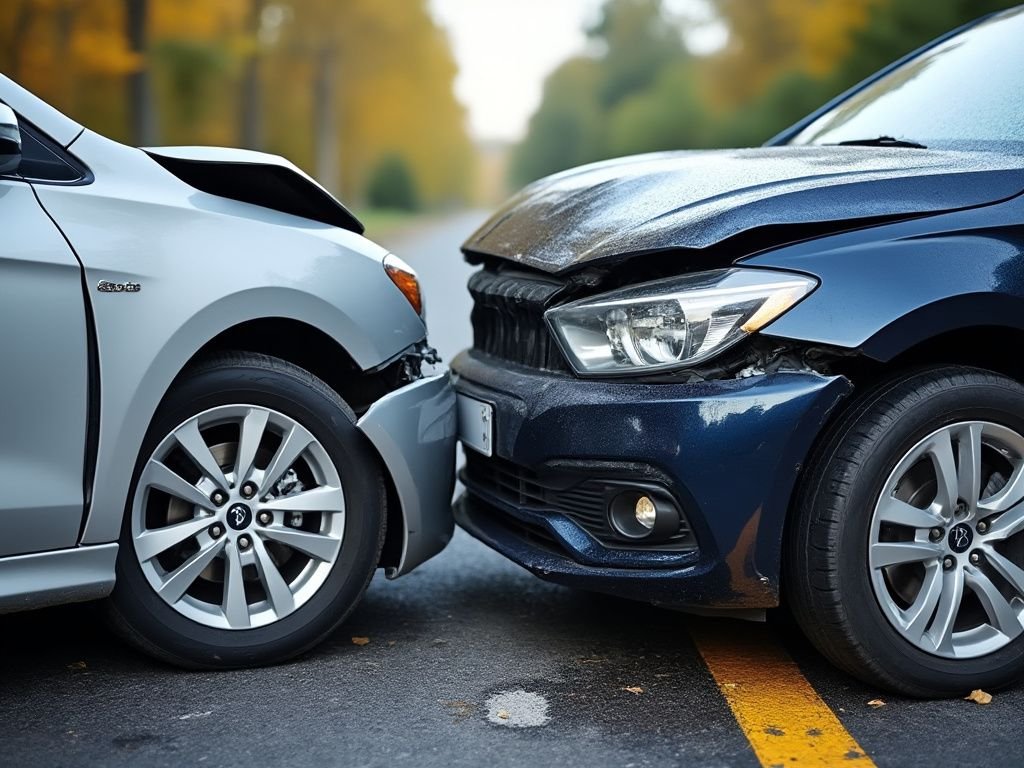
Car insurance for P platers is optional cover that protects provisional licence holders against the cost of damaging their own car, someone else’s property, or both. Premiums tend to be higher because insurers treat new drivers as more likely to claim, and many policies add a young-driver excess on top. Indicative comprehensive quotes for a 19-year-old in recent research ranged from roughly $2,000 to over $5,000 a year. This guide explains the types of cover, what a P-plater might pay, how a parent’s policy works and how to compare quotes fairly.
What Is Car Insurance for P Platers?
A P-plater is a driver who has passed their driving test and holds a provisional (or probationary) licence, but has not yet moved to a full licence. Most states and territories use two stages, commonly called P1 and P2, though plate colours, time periods and restrictions differ by jurisdiction. Always check your own road authority for the rules that apply to you.
P-platers buy the same products as everyone else, but insurers price them using age and driving experience, and some add extra excesses.
Two layers of cover matter:
- Compulsory Third Party (CTP) insurance is required to register a car. It generally covers injury to other people, not damage to vehicles or property. How it is arranged depends on where you live. Our guide to whether car insurance is compulsory in Australia covers the basics.
- Optional car insurance covers vehicle and property damage. It comes in three levels: comprehensive, third party fire and theft, and third party property damage.
Relying on CTP alone means you carry the repair bill for your own car and anyone else’s car you damage.
How Much Is Car Insurance for a P-Plater in Australia?
There is no single price. How much does car insurance cost for a P-plater? It depends on your age, car, postcode, claims history, excess and insurer, and quotes for the same driver can differ by thousands of dollars. The tables below are published examples, not predictions of your premium.
Indicative comprehensive premiums for one driver profile
| Insurer | Indicative annual premium |
|---|---|
| Budget Direct | about $2,071 |
| Bingle | about $2,238 |
| NRMA | about $2,645 |
| Hume Bank | about $3,929 |
| QBE | about $5,363 |
Source: Finder’s P-plater guide. Quotes collected March 2026. Driver: 19 years old, male or female. Location: postcode 2011 (NSW). Car: 2020 Toyota Corolla Ascent Sport. Distance: 15,000 km a year. Cover: comprehensive. Excess: as close to $850 as possible. Only a selection of insurers is shown.
Average comprehensive premiums for young drivers by state
| State or territory | Average annual premium |
|---|---|
| Victoria | about $4,070 |
| New South Wales | about $3,187 |
| Northern Territory | about $3,094 |
| Queensland | about $2,775 |
| South Australia and Western Australia | about $2,669 each |
| ACT | about $2,404 |
| Tasmania | about $2,192 |
Source: CHOICE’s young driver insurance research. Based on about 29,500 quotes gathered in July 2026 for drivers aged 25 and under, comprehensive cover, standardised excesses. This covers all young drivers, not only P-platers, and vehicle models vary.
So, how much is car insurance for P-platers? Published examples span roughly $2,000 to over $5,000 a year, and the insurer and state make a big difference.
What changes your premium
- Age and experience. Premiums generally fall as you gain experience and hold a clean record.
- The car. Make, model, age, repair costs and theft risk all matter. Modified or high-performance cars usually cost more to insure.
- Where you live and park. Postcode, and whether the car is garaged overnight, can change the price.
- How much you drive. Annual kilometres affect the premium, so estimate honestly.
- Cover level and excess. A higher voluntary excess usually lowers the premium but raises what you pay when you claim.
To see how these inputs interact, try our car insurance calculator for a rough estimate, then read our guide to how much car insurance costs in Australia. Only a real quote shows your actual premium.
Why Is Car Insurance More Expensive for P-Platers?
Insurers price risk using claims data, and newly licensed drivers are statistically more likely to be involved in accidents. Insurers differ in how they weigh this, so there is no universal rule, but common drivers include:
- Limited driving experience. You have less time on the road than most policyholders.
- Age-based assessments. Under-25 drivers often attract higher premiums and additional excesses.
- Claims history. A new driver has no no-claim record to offset the risk.
- Repair and replacement costs. Modern cars with sensors and cameras can be costly to fix.
- Location and use. Busy postcodes and high kilometres tend to push prices up.
- Modifications. Changes to engine, suspension or appearance can raise premiums or be excluded.
What Is the Best Car Insurance for P-Platers?
There is no universal best policy, because the right choice depends on your car’s value, your budget and what you could afford to pay after an accident. Any “best insurer” ranking only applies to the profile tested.
| Feature | Comprehensive | Third party fire and theft | Third party property damage |
|---|---|---|---|
| Damage to your car in an accident | Generally yes | No | No |
| Damage to other people’s property | Yes, up to limits | Yes, up to limits | Yes, up to limits |
| Fire | Yes | Yes | No |
| Theft | Yes | Yes | No |
| Typically suits | Newer or financed cars, drivers who could not afford a replacement | Older cars of modest value | Low-value cars and tight budgets |
| Key limitations | Highest premium; exclusions and excesses apply | No cover for your own accident damage | No cover for your own car at all |
Exact inclusions vary between insurers, so check the Product Disclosure Statement (PDS). For a deeper explanation of the trade-offs, see our guide to comprehensive vs third party car insurance.
Cheapest Car Insurance for P-Platers: How to Find Affordable Cover
The cheapest car insurance for P-platers is rarely the lowest headline premium. A cheap policy with a large excess or narrow cover can cost more after an accident. The aim is cheap car insurance for a P-plater that still protects you where it matters.
- Compare several insurers. CHOICE suggests collecting at least five quotes, including your current insurer.
- Match cover to the car. A $4,000 hatchback may not justify comprehensive cover, but a financed car probably does.
- Check annual versus monthly payments. Monthly instalments can add up.
- Choose your voluntary excess carefully. Only pick an excess you could pay tomorrow.
- Pick a car that is cheap to insure and repair. Get a quote before you buy.
- Park securely. Garaging overnight may lower your price.
- Be accurate about kilometres. Underestimating can cause problems at claim time.
- Skip unnecessary modifications. They can raise premiums or cause claim disputes.
- Ask about discounts. Online, multi-policy and low-kilometre options exist, and eligibility varies.
- Review at renewal. Your risk profile improves with experience, so shop around each year.
If you are buying your first car in Western Australia, factor in transfer costs with our car stamp duty WA calculator.
Can a P-Plater Be Covered Under Their Parents’ Car Insurance?
Often, yes. If a parent owns the car, a P-plater can usually be added as a driver on the parent’s policy, and this is frequently cheaper than a separate policy. Expect the premium to rise and, in some cases, an extra excess.
Key points to understand:
- Tell the insurer. Regular drivers should be disclosed. Some insurers cover unlisted drivers but charge a higher excess after a claim.
- Main driver matters. If you drive the car most often, you should be recorded as the main driver, whoever owns it.
- Ownership. If you own the car, you generally need a policy in your name.
- Accuracy. The policyholder must give truthful answers. Mistakes can reduce or void a claim.
Do not list a parent as the main driver when the P-plater uses the car most often. Insurers treat this (“fronting”) as misrepresentation, and a claim could be refused. Be open about who drives.
P1 vs P2 Car Insurance: What Should Drivers Know?
P1 is usually the first, more restricted provisional stage, and P2 is the later stage before a full licence. How long each lasts, and which restrictions apply, depends on your state or territory, so check with your road authority.
For insurance, what matters most is your age and experience, not the plate colour. Some policies treat newly licensed drivers differently, and some insurers apply an inexperienced-driver excess for a set period. These rules vary, so there is no reliable universal premium difference between P1 car insurance and P2 car insurance.
Breaking licence conditions, such as carrying restricted passengers, can jeopardise a claim, as AAMI notes.
Best Car Insurance for P-Platers in Victoria
Searching for the best car insurance for P-platers in Victoria? Start with how Victoria’s system works. The Transport Accident Charge is built into registration, and the TAC funds support for people injured in transport accidents. It is injury cover, not vehicle cover.
That means TAC does not replace comprehensive, third party fire and theft, or third party property insurance. Repairs to your car or damage to another driver’s car are your responsibility unless you hold optional cover.
CHOICE’s July 2026 sample put Victoria at the top for average young-driver comprehensive premiums, so comparing matters here. RACV also warns that young-driver excesses are added on top of the basic excess, and its example uses a $700 basic excess. To compare policies as a Victorian P-plater:
- Get several quotes for the same car, kilometres and excess.
- List the age, inexperienced-driver and unlisted-driver excesses.
- Check the sum insured basis, exclusions and repairer rules.
- Read the RACV guide for P-platers and young drivers for Victorian context.
How to Compare Comprehensive Car Insurance for P-Platers
The best comprehensive car insurance for P-platers is the policy that suits the car, covers who really drives it and has excesses you can afford. Features differ by insurer, so compare:
- Agreed value vs market value. Agreed value is a figure set when you take out the policy. Market value is assessed at claim time. Moneysmart explains both.
- Accident damage regardless of fault, and any limits on liability for others’ property.
- Theft and fire.
- Storm and flood.
- Windscreen cover and whether it affects your no-claim position.
- Choice of repairer.
- Hire car benefits while yours is being fixed.
- Roadside assistance.
- New car replacement, where offered, and its age limits.
- Excess and exclusions.
If the car is financed, ask your lender what cover it requires. Lenders often require comprehensive insurance, and our financial calculators can help you weigh insurance against loan repayments.
What Is a Young Driver or Inexperienced Driver Excess?
An excess is the amount you pay towards a claim before the insurer pays the rest. P-platers can face several, and they may stack:
- Standard (basic) excess. Applies to every claim.
- Voluntary excess. An extra amount you choose to lower the premium.
- Age excess. For drivers under a set age, commonly 25.
- Inexperienced-driver excess. For drivers who have not held a full licence for a set period.
- Unlisted-driver excess. Applies if the driver was not named on the policy.
CHOICE reports typical ranges of $300 to $2,000 for age excess, $400 to $1,500 for inexperienced-driver excess and $400 to $3,000 for unlisted-driver excess. Your PDS lists the exact figures.
Hypothetical example (not a quote). A listed P-plater has a $6,000 at-fault repair bill. The policy has an $800 standard excess and a $1,000 age excess, so the driver pays $1,800. If the driver had not been listed and a $2,000 unlisted-driver excess applied instead, the driver would pay $2,800. The cheaper premium would then have cost an extra $1,000 at claim time.
Common Mistakes P-Platers Should Avoid
- Not telling the insurer who drives. Regular drivers should be disclosed.
- Misrepresenting the main driver. This can void a claim.
- Assuming CTP pays for car repairs. It does not.
- Ignoring additional excesses. Read them before buying.
- Choosing on premium alone. Check cover, limits and exclusions.
- Overlooking modifications. Declare them.
- Guessing kilometres. Use a realistic figure.
- Assuming every policy covers every driver. Some do not.
- Skipping the exclusions. Learn what is not covered.
- Not updating details. Tell your insurer about a new address, car or driver.
FAQ
Frequently Asked Questions About Car Insurance for P-Platers
It varies widely. Published examples for young drivers run from about $2,000 to over $5,000 a year for comprehensive cover. Use our calculator as a guide, then get quotes for your own details.
Insurers see inexperienced drivers as a higher claims risk, and many add age-related excesses.
It depends on your profile. The cheapest insurer for one driver may not be cheapest for another, so compare several quotes.
Often yes, but the parent should check the policy and tell the insurer. Being unlisted can lead to a higher excess.
Not always, but regular drivers should be listed. Check your PDS for how unlisted drivers are treated.
It can be if you could not afford to repair or replace the car, or if it is financed. For a low-value car, a cheaper cover level may be reasonable.
Yes. Third party property damage and third party fire and theft are available, though some insurers apply their own rules.
Not by a fixed rule. Insurers focus on age and experience, so any difference varies by insurer.
The policy may still respond, but a higher unlisted-driver excess can apply, and misrepresentation can affect the claim.
No. CTP generally covers injury to people, not vehicle or property damage. Third party property damage insurance covers that.
Car insurance for P-platers is a balance between price and protection. Compare quotes on a like-for-like basis, check the excesses, be open about who drives, and match cover to the car’s value. The cheapest premium is not always the cheapest outcome. Read the PDS and Target Market Determination (TMD) before buying, and start with our car insurance calculator or browse more guides and calculators.
General information only, not personal financial or insurance advice. See our disclaimer. Price figures come from the third-party sources cited. Check current PDS documents and your road authority’s rules before deciding.