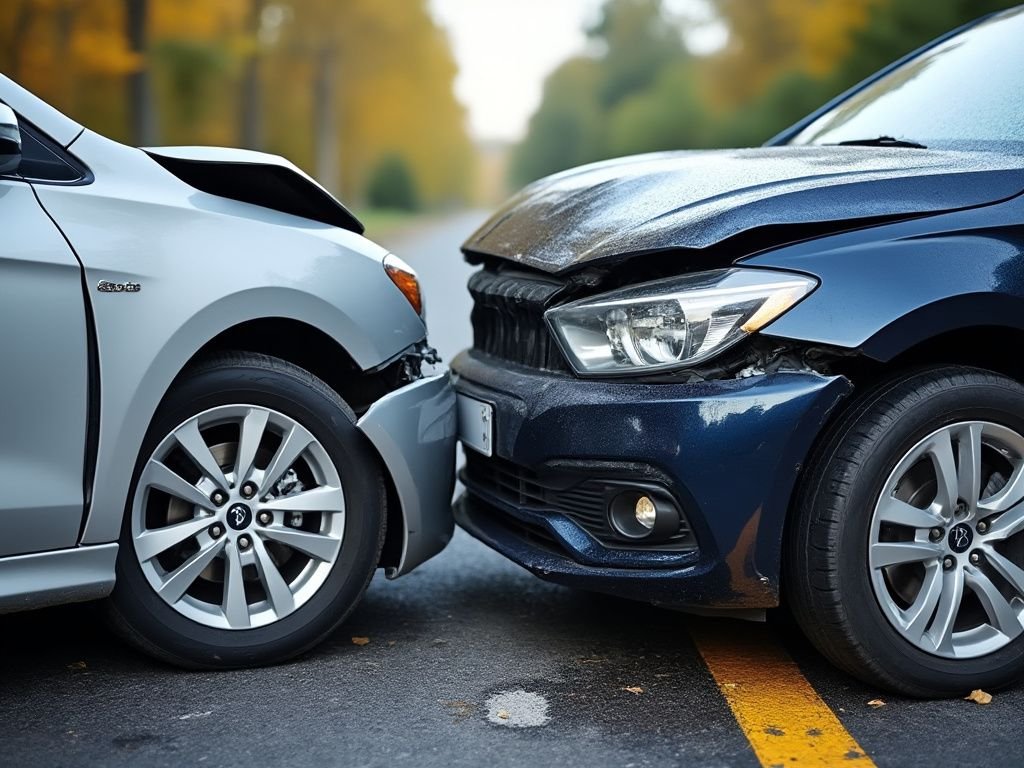
Yes, but only one type. Compulsory third party (CTP) insurance is required for every registered vehicle in Australia. Comprehensive car insurance and third party property damage insurance are generally optional. CTP covers eligible compensation claims for people injured or killed in a crash. It does not pay for damage to your car, someone else’s car, or any other property.
So when people ask whether car insurance is compulsory in Australia, the accurate answer is “CTP is, everything else isn’t, and the details depend on your state or territory.”
What Car Insurance Is Compulsory in Australia?
The only legally required cover is CTP. Every Australian state and territory runs its own scheme, but the principle is the same: you can’t register a vehicle without it. The South Australian Government puts it plainly: registration is compulsory, and so is CTP.
In most jurisdictions you don’t buy a stand-alone policy. The cost sits inside your registration payment. New South Wales is the notable exception, where you buy a CTP policy (the Green Slip) before you can register.
Everything else is a commercial product you choose to buy:
- Third party property damage: covers damage you cause to other people’s vehicles and property.
- Third party fire and theft: adds cover for your own car if it’s stolen or damaged by fire.
- Comprehensive: the broadest level, generally covering your own car as well as other people’s property, subject to the policy’s limits, exclusions and excess.
Is it compulsory to have car insurance in Australia beyond CTP? Not by law, though a finance contract might require it.
What Does Compulsory Third Party (CTP) Insurance Cover?
CTP protects you against the financial impact of injuring or killing someone through the use of your vehicle. In South Australia, the government describes it as protecting you and other people who use your registered and insured vehicle against that liability, anywhere in Australia.
Depending on the scheme, injured people who may be eligible for support include:
- Passengers in any vehicle
- Pedestrians
- Cyclists and motorcyclists
- Drivers of other vehicles
Benefits can include medical treatment, rehabilitation, care and some income support, but the detail varies by jurisdiction:
- Fault matters in some places and not others. Queensland’s scheme is a fault-based scheme, so an injured person generally has to show another driver was at fault (MAIC). Victoria’s TAC and Tasmania’s MAIB schemes provide benefits on a no-fault basis for many injuries.
- Catastrophic injury support sits alongside CTP. South Australia pairs its CTP scheme with the Lifetime Support Scheme, which supports people who are very seriously injured regardless of who caused the crash (CTP Regulator). Western Australia’s policy also covers catastrophic injuries (Insurance Commission of WA).
- Injured drivers aren’t treated the same way everywhere. Whether an at-fault driver can claim for their own injuries depends on the scheme where the crash happened.
Treat any “CTP covers X” statement as general. Your state or territory’s scheme decides.
What Does CTP Insurance Not Cover?
CTP is about injuries to people. It does not cover:
- Damage to your own car
- Damage to other vehicles
- Damage to fences, buildings, letterboxes or other property
- Theft or fire
- General repairs after a crash
The SA Government is explicit that CTP covers bodily injury and not damage to vehicles or property. Victoria’s TAC says the same about its charge: personal injury cover, no property damage.
This is where the real financial exposure sits. If you reverse into a late-model SUV, CTP won’t pay for it, and your own car’s damage is on you unless you’ve bought separate cover.
Is Car Insurance Compulsory in Every Australian State?
CTP is compulsory in every state and territory, but it’s arranged differently. Use this table as a starting point, then confirm with the official source for your jurisdiction.
| State / territory | Scheme name | How it’s generally arranged | Included with registration? | Official source |
|---|---|---|---|---|
| NSW | CTP “Green Slip” | Buy from a licensed insurer before you register | No, bought separately first | SIRA |
| QLD | CTP | Paid within your registration; you can choose between licensed insurers | Yes | MAIC |
| SA | CTP | Paid with registration; you nominate an approved insurer | Yes | SA.GOV.AU |
| VIC | Transport accident charge (TAC) | Part of the registration payment, run by the Transport Accident Commission | Yes | TAC |
| WA | Motor injury insurance | Part of the vehicle licence fee; the Insurance Commission is the sole provider | Yes | ICWA |
| TAS | MAIB premium | Paid with registration; run by the Motor Accidents Insurance Board | Yes | MAIB |
| ACT | Motor Accident Injuries (MAI) insurance | Paid with registration; you can select from approved MAI insurers | Yes | ACT Treasury |
| NT | Motor Accidents Compensation (MAC) scheme | Included in the registration fee | Yes | NT Government |
Two points to keep straight. First, insurer choice is not universal. NSW, Queensland, South Australia and the ACT let you pick an insurer, while Victoria, Western Australia, Tasmania and the Northern Territory use a single government-run scheme. Second, in NSW the Green Slip isn’t valid until the vehicle is registered (SIRA), so the two steps go together.
Is Car Insurance Compulsory in South Australia?
Yes. CTP is compulsory for registered vehicles in South Australia, and the premium is paid at the same time as your registration, according to the SA Government.
Here’s how it works in practice:
- You choose your insurer. At each registration renewal you can pick from approved CTP insurers. The CTP Regulator currently lists AAMI, Allianz, NRMA, QBE and Youi (CTP Regulator).
- Cover is the same whichever insurer you choose. The SA Government says each insurer’s policy coverage is the same, so your renewal notice or mySA GOV account compares them on premium and claimant service rating.
- It’s injury cover only. CTP doesn’t cover damage to vehicles or property.
- Other cover is separate. Third party property and comprehensive insurance are optional policies you arrange with a private insurer.
Is Comprehensive Car Insurance Compulsory?
No. Comprehensive insurance is generally optional under the law. It usually covers damage to your own car, damage you cause to other people’s vehicles and property, and often theft, fire and some weather events. The exact cover depends on the Product Disclosure Statement (PDS).
There’s one common catch: your lender might require it. If you’ve financed the car, the loan agreement may oblige you to hold comprehensive cover. The SA Government notes that if you’ve taken out a loan to buy a car, you may be required to buy this type of insurance. Check your contract before you drop cover.
Comprehensive insurance doesn’t include CTP. You still pay CTP through your registration (or Green Slip in NSW).
Is Third Party Property Damage Insurance Compulsory?
No, it’s generally optional too. But it addresses a risk CTP doesn’t touch. The SA Government explains that third party property insurance may cover damage you cause to another person’s property but not your own car, and that without it you may have to pay for the other person’s repairs if you’re responsible for a crash.
Crash into a newer car, a shopfront or a fence and the repair bill lands on you. It won’t repair your own car, but it caps that exposure.
What Is the Difference Between CTP, Third Party and Comprehensive Insurance?
“Third party” in CTP refers to injured people. “Third party” in third party property damage refers to someone else’s property. They are different products.
| Feature | CTP | Third party property damage | Third party fire and theft | Comprehensive |
|---|---|---|---|---|
| Legal status | Compulsory | Optional | Optional | Optional |
| Injury or death compensation for other people | Yes, under your state or territory scheme | No | No | No |
| Damage to other people’s property | No | Generally yes, subject to policy terms | Generally yes, subject to policy terms | Generally yes, subject to policy terms |
| Damage to your own car | No | No | Generally no, apart from fire or theft | Generally yes, subject to policy terms |
| Theft and fire of your car | No | No | Generally yes | Generally yes |
| How you get it | Through registration (or Green Slip in NSW) | Through a private insurer | Through a private insurer | Through a private insurer |
Exact benefits depend on the policy wording and the scheme in your jurisdiction, so read the PDS for any optional policy.
Is Car Insurance Compulsory in Australia Through Woolworths?
Woolworths sells insurance, but it isn’t a regulator, and the legal requirement doesn’t come from any retailer or insurer. The compulsory part is CTP, set by state and territory law and tied to registration.
Woolworths-branded car insurance, such as comprehensive or third party cover, is optional. Offering a product doesn’t make it compulsory. Its car insurance is issued by The Hollard Insurance Company, with Woolworths Group acting as an authorised representative, according to the Everyday Insurance website. The site’s own FAQ describes CTP as the mandatory cover for injuries and tells customers to check CTP status with the transport authority in the state where the vehicle is registered.
If you’re considering any branded policy, read the current PDS and Target Market Determination on the provider’s site, not a summary from a third party.
What Happens If You Drive Without CTP Insurance?
Driving without CTP generally means driving without valid registration, which is illegal. Official sources describe the consequences in broad terms:
- NSW: SIRA says driving an unregistered vehicle is illegal and punishable by heavy fines and in some cases jail. Being caught without valid CTP, even unknowingly, can bring on-the-spot fines and further penalties through the courts. If you’re at fault in a crash without CTP, you could face substantial fines and financial recovery action, and consequences escalate with serious injury or death (SIRA).
- Victoria: If the TAC charge hasn’t been paid when a crash happens (after a 28-day grace period), the vehicle is treated as uninsured, and the TAC may seek to recover compensation it pays (TAC).
- Elsewhere: Penalties differ. Check your state or territory’s transport authority.
Fine amounts differ across jurisdictions and change over time, so this article doesn’t quote figures. The bigger risk is financial: an uninsured owner can face claims for someone else’s injuries.
Do You Need More Than CTP Insurance?
CTP is the legal minimum, not a complete safety net. Consider what it leaves out:
- You hit another car. CTP pays nothing toward that car’s repair.
- Your car is stolen, burned or damaged in a storm. CTP pays nothing.
- You’re at fault in a single-vehicle crash. Your own car’s repair bill is yours.
Optional cover is worth weighing if you have a loan, a car you couldn’t afford to replace, or limited savings. Third party property damage can be enough for an older, low-value car; comprehensive tends to suit cars you’d struggle to replace.
To see how different factors could affect your budget, you can use our car insurance calculator as a rough planning aid. It’s a planning aid, not an insurer quote.
How to Check Whether Your Car Has CTP Insurance
Start with your registration. In most jurisdictions, current registration means CTP is in place.
- Check your renewal notice or registration certificate. It usually lists the registration expiry and, in some states, the CTP insurer.
- Use your state’s registration portal. Look for the free registration or CTP check from the transport authority.
- NSW: Run a free rego check through Service NSW. Remember that the Green Slip isn’t valid until the vehicle is registered.
- SA: Check registration through your mySA GOV account or the CTP insurer search, which identifies a vehicle’s CTP insurer at the date of an accident.
- Queensland: MAIC offers CTP checks online using a registration number (MAIC).
- Still unsure? Contact your registration authority or CTP insurer directly.
Frequently Asked Questions
CTP is. Other car insurance is generally optional. CTP is required to register a vehicle in every state and territory.
Only compulsory third party insurance (called a Green Slip in NSW, and known by other scheme names elsewhere). It covers injury and death claims, not property damage.
In Queensland, South Australia, Victoria, Western Australia, Tasmania, the ACT and the Northern Territory, yes. In NSW you buy the Green Slip first, then register.
Yes. CTP is paid with your registration, and you can choose from approved insurers at renewal. Property and comprehensive cover are separate and optional.
No. A lender may require it as a condition of your loan, so check your finance agreement.
No. It’s optional, but it can protect you from repair bills for other people’s vehicles and property.
No. The legal requirement is CTP, not a particular brand’s policy. Woolworths’ car insurance products are optional.
Generally not. CTP is tied to registration, and driving an unregistered vehicle is illegal. The SA Government lists only a few narrow exemptions, such as certain agricultural machinery.
No. CTP covers injuries to people. Damage to another car is a matter for third party property damage or comprehensive cover.
No. CTP is the compulsory injury cover. “Third party” policies from private insurers are optional and cover property damage (and, in some cases, fire and theft).
CTP is the only car insurance Australian law requires, and it protects injured people, not your car or anyone else’s property. Everything else, from third party property to comprehensive, is your call, unless a lender says otherwise.
Check your registration, confirm how CTP works in your state or territory, and think about what you’d do if handed a repair bill for someone else’s car. That’s the gap CTP doesn’t close.
Last reviewed: November 2026. This article provides general information only and doesn’t consider your personal circumstances. Always check current government guidance and read the relevant policy documents before making decisions.