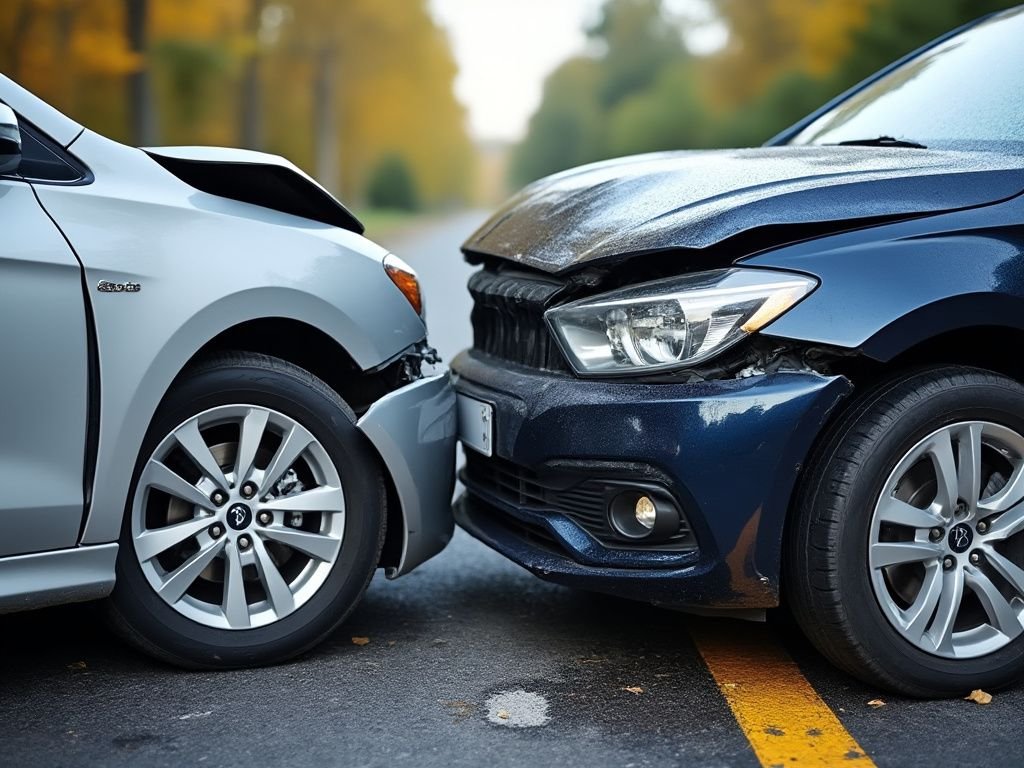
Compulsory car insurance in Australia means Compulsory Third Party (CTP) insurance, which every registered vehicle must have. CTP pays compensation to people injured or killed in a crash involving your vehicle. It does not repair your car, someone else’s car or a fence you drive into. Comprehensive and other car insurance is generally optional, but without it you may have to pay for vehicle and property damage yourself. How CTP is bought, who provides it and what it pays all vary by state and territory, so this guide walks through each scheme, compares CTP with optional cover and shows you how to check your own position.
General information only. This article is not legal or financial advice and does not consider your personal circumstances. Always check the official scheme or policy documents that apply to you.
Is Car Insurance Compulsory in Australia?
Short answer: Yes, but only one type. Compulsory Third Party (CTP) insurance, called a Green Slip in NSW, is required to register and drive a vehicle in every state and territory. Comprehensive, third party property damage and third party fire and theft insurance are generally optional.
That is why the question “is car insurance compulsory” gets two answers. The legal minimum is CTP personal injury cover. MoneySmart lists CTP as the one product you must hold, and says that in some states it is included in your registration costs so you never buy it separately.
People confuse CTP with ordinary car insurance for three reasons:
- In Victoria, WA, Tasmania and the Northern Territory, CTP is built into the registration bill, so many owners never see it as a separate product.
- In NSW, you buy a Green Slip from an insurer, which feels like buying car insurance.
- Everyday talk about “car insurance” usually means comprehensive cover, which is optional.
One caution: a car loan can add its own rules. Some lenders require a minimum level of cover as a loan condition, so check your finance contract. That is a contract requirement, not a legal one.
What Is Compulsory Third Party Car Insurance?
Compulsory Third Party car insurance, or CTP insurance, is personal injury insurance linked to a vehicle’s registration. If a registered vehicle is involved in a crash that injures or kills someone, the scheme pays for that person’s treatment and losses, and the vehicle owner and driver are protected from having to pay those costs personally.

If you are asking what is compulsory third party car insurance in plain terms: it protects other people from the financial fallout of a crash, and it protects you from a compensation bill that could run into the millions. CHOICE notes that cover can extend to passengers, drivers of other vehicles, pedestrians, cyclists and dependants of someone who dies.
A few core points apply everywhere:
- Tied to the vehicle, not the driver. Cover follows the registered vehicle, so people legally driving it are generally covered.
- State and territory schemes. Each jurisdiction runs its own scheme under its own laws.
- Fault rules differ. Some schemes pay injured people whoever caused the crash (no-fault). Others generally require the injured person to show someone else was at fault (fault-based).
- How claims work. In a fault-based scheme, an injured person usually claims against the CTP insurer of the vehicle that caused the crash. In a no-fault scheme, they claim from the scheme itself, or its insurer, even if they caused the crash.
What Does CTP Insurance Cover?
CTP deals with injuries to people. Depending on the scheme, eligible people may receive help with:
- Ambulance, medical treatment and rehabilitation.
- Lost income while unable to work.
- Care and support, such as help at home.
- Funeral costs and support for dependants if someone dies.
- Lifetime care for catastrophic injuries, in some schemes.
Benefits, caps, time limits and exclusions are set by each scheme’s legislation, so two people with similar injuries can receive different support in different states. The biggest difference is how at-fault drivers are treated. Victoria, Tasmania, the ACT and the NT are no-fault schemes. NSW is a hybrid in which at-fault drivers get more limited benefits. Queensland, South Australia and WA are fault-based, with separate catastrophic injury schemes that can help regardless of fault. Check your state regulator for the current detail.
What Does Compulsory Car Insurance Not Cover?
CTP does not generally cover:
- Damage to your own car. Repairs after a crash are not part of CTP.
- Damage to another person’s vehicle.
- Damage to buildings, fences, letterboxes or other property.
- Theft of your vehicle.
- Fire damage to your vehicle.
Optional policies fill those gaps. Third party property damage insurance helps with damage you cause to other people’s property. Third party fire and theft adds protection for your own car against those two events. Comprehensive insurance adds broader cover for your vehicle. Every policy has limits and exclusions, so read the Product Disclosure Statement (PDS).
Example: You misjudge a turn and hit a parked luxury car, then slide into a shopfront. The driver of the other car is unhurt. CTP has nothing to pay because nobody was injured. The repair bills for the parked car and shopfront land on you unless you hold third party property damage or comprehensive cover.
Is Comprehensive Car Insurance Compulsory?
No. Comprehensive car insurance is not compulsory in any Australian state or territory. You still need CTP under your state’s scheme, because comprehensive cover does not replace it.
Some drivers choose comprehensive cover anyway. Questions worth asking, similar to those MoneySmart suggests, include:
- Could you afford to replace or repair your car if it were written off, stolen or damaged?
- Could you pay for damage you cause to someone else’s car?
- Do you have a car loan, and does your lender set minimum cover?
- Is the car parked on the street, where theft or vandalism risk may be higher?
A newer, financed or high-value car may make comprehensive cover more attractive. An older, low-value car you could replace from savings may not need it. To see how cover choices can affect a premium, try our car insurance calculator or read how much car insurance costs in Australia.
Comprehensive Car Insurance vs Compulsory Third Party
| CTP insurance | Third party property damage | Comprehensive | |
|---|---|---|---|
| Legal requirement? | Yes, for registered vehicles | No | No |
| Personal injury cover | Yes, under the state scheme | No | No (CTP covers this) |
| Damage to your own car | No | No | Generally yes, subject to terms |
| Damage to others’ property | No | Yes, subject to limits | Generally yes, subject to limits |
| Theft | No | No | Generally yes |
| Fire | No | No | Generally yes |
| Typical purpose | Injury compensation for people | Cover for damage you cause to others | Broader cover for your car and others’ property |
| Replaces CTP? | n/a | No | No |
Third party fire and theft sits in between: it generally includes third party property damage plus cover for your own car if it is stolen or damaged by fire. For a deeper comparison, see our guide to comprehensive vs third party car insurance.
Is Car Insurance Compulsory in Victoria?
In Victoria, CTP is compulsory, but you do not buy it from an insurer. It is paid as the Transport Accident Charge (TAC charge), which appears on your registration renewal notice and goes to the Transport Accident Commission (TAC). RACV notes that an unregistered vehicle is not covered.
How it works:
- No-fault scheme. The TAC says it does not consider fault when deciding whether someone is eligible for compensation. Injured people can claim even if they caused the crash.
- One provider. The TAC is the sole CTP insurer, so there is no comparing CTP quotes.
- Premium zones. The charge varies by vehicle type and risk zone, so check the TAC’s current rates.
- Personal injury only. The TAC does not pay for vehicle or property damage.
Because the TAC does not cover damage, many Victorians consider optional third party property damage or comprehensive insurance. That is a choice, not a legal requirement. To confirm your current requirements, check your renewal notice and the official Victorian registration and TAC pages.
Compulsory Car Insurance in NSW: What Is a Green Slip?
A Green Slip is NSW’s name for CTP. Unlike Victoria, it is not built into registration. The State Insurance Regulatory Authority (SIRA) says you must buy a CTP policy before you can register any vehicle in NSW, and buy a new one before the current one expires.
How it works:
- You choose an insurer. CHOICE lists six licensed insurers: AAMI, Allianz, GIO, NRMA, QBE and Youi.
- Prices vary. Insurers set premiums within the regulator’s framework, so use SIRA’s Green Slip Price Check to compare.
- Linked to registration. Once used to register your car, a Green Slip stays tied to that registration. Insurers report the purchase to Transport for NSW.
- Not comprehensive. A Green Slip covers injuries to people, not damage to any car.
For a simple check on current NSW rules, search the official Green Slip website or contact SIRA’s CTP Assist service.
Compulsory Car Insurance Requirements in Other Australian States
State-by-state CTP comparison table
| State / territory | Scheme | How you pay | Choose provider? | Fault basis | Official source |
|---|---|---|---|---|---|
| NSW | CTP Green Slip | Bought separately before registration | Yes, licensed insurers | Hybrid; at-fault driver benefits limited | SIRA |
| Victoria | TAC charge | Part of registration | No, TAC only | No-fault | TAC |
| Queensland | CTP | Paid with registration | Yes, licensed insurers | Fault-based | MAIC |
| WA | Motor Injury Insurance | Part of vehicle licence | No, ICWA only | Fault-based; catastrophic injury support | ICWA |
| SA | CTP | Paid with registration | Yes, five approved insurers | Fault-based; Lifetime Support Scheme | CTP Regulator |
| Tasmania | MAIB scheme | Part of registration | No, MAIB only | No-fault | MAIB |
| ACT | Motor Accident Injuries (MAI) | Part of registration | Yes, four insurers | No-fault | Access Canberra |
| NT | Motor Accidents Compensation (MAC) | Part of registration | No | No-fault | MACC |
Arrangements are not identical, and details change, so treat this table as a starting point and confirm with the official source.
Queensland
The Motor Accident Insurance Commission (MAIC) says CTP is paid alongside registration and passed on to the licensed insurer you nominate. The scheme is fault-based: an injured person generally must show someone else was at fault. Catastrophic injuries are supported through a separate scheme. Check MAIC’s current insurer list before choosing.
Western Australia
CTP is part of Motor Injury Insurance, issued with your vehicle licence by the Insurance Commission of Western Australia (ICWA), the only provider. The policy also includes Catastrophic Injuries Support for people seriously hurt in WA crashes. WA is fault-based for ordinary injury claims.
South Australia
The CTP Insurance Regulator says CTP is provided by five government-approved insurers: AAMI, Allianz, NRMA, QBE and Youi. Each provides the same Policy of Insurance, and you pay when you renew registration. The scheme works alongside the Lifetime Support Scheme for very serious injuries.
Tasmania
The Motor Accidents Insurance Board (MAIB), a government body, runs a no-fault scheme and the premium is built into registration. There is no private insurer to compare.
Australian Capital Territory
The ACT replaced its earlier CTP scheme with the no-fault Motor Accident Injuries (MAI) scheme in 2020. You select an insurer when registering or renewing, and the cost is included in the registration fee paid to Access Canberra. Access Canberra lists four insurers: AAMI, APIA, GIO and NRMA.
Northern Territory
The NT runs the no-fault Motor Accidents Compensation (MAC) scheme, funded through registration. There is no insurer choice.
AAMI Compulsory Third Party Car Insurance: What Should Drivers Know?
AAMI is one of several insurers involved in CTP schemes where motorists can choose a provider. In the sources reviewed, AAMI appears among the insurers in NSW, South Australia and the ACT. It was not listed among Queensland’s insurers in the CHOICE and Canstar guides, and in Victoria, WA, Tasmania and the NT there is no choice of insurer at all. Availability can change, so confirm with your state regulator.
Two points matter more than the brand:
- Benefits come from the scheme. Where several insurers are licensed, the statutory benefits are set by law. CHOICE notes that the ACT insurers provide the same cover and differ mainly on premium, though insurers may offer extras or incentives.
- CTP is separate from AAMI’s other products. AAMI comprehensive or third party property damage insurance is optional and has its own PDS, exclusions and limits. Holding AAMI CTP does not give you car damage cover.
If you are comparing providers, compare the price for your vehicle and any genuine extras, and check service information the regulator publishes. SA’s regulator, for example, publishes claimant service ratings.
What Happens If You Drive Without Compulsory CTP Insurance?
Because CTP is tied to registration, driving without it usually means driving an unregistered vehicle. SIRA says that in NSW this is illegal, punishable by heavy fines and in some cases jail, and that an at-fault crash without CTP can lead to substantial fines and recovery action. Queensland’s MAIC warns of a hefty penalty for being both uninsured and unregistered.
The bigger risk may be financial. If you injure someone while uninsured, you could be pursued for medical and compensation costs personally. RACV adds that in Victoria an unregistered vehicle has no TAC cover.
Penalties differ by jurisdiction and are updated over time, so this article does not quote fine amounts. Check your state road authority for current figures.
Do You Need Additional Car Insurance Beyond CTP?
No law requires it, but the right level depends on what you could afford to lose.
- CTP only. The legal minimum. It may suit an owner of a very low-value car who can afford repairs and damage to others’ property from savings. MoneySmart shows how an owner with only CTP can face a large debt after hitting an expensive car.
- Third party property damage. Pays for damage you cause to others’ vehicles and property. A common step up for an older car.
- Third party fire and theft. Adds cover for your car if stolen or damaged by fire. It may suit a mid-value car parked off-street where collision repairs would be affordable.
- Comprehensive. Covers your own car after collisions and other insured events. It may suit a newer, financed or high-value car.
Examples: A student with a 15-year-old hatchback might choose third party property damage to protect against hitting a new car. A family with a recent SUV and a loan might choose comprehensive. Neither is obliged to by law. To compare how cover levels affect a premium, use our car insurance calculator.
How to Check Whether Your Car Has Compulsory Insurance
- Identify your state or territory. Use the one where the vehicle is registered.
- Check your registration renewal notice. It usually shows what you pay, including any TAC charge or CTP premium.
- Confirm registration status. Use your state road authority’s online check. Unregistered usually means no CTP.
- Work out whether CTP is bundled or separate. NSW is separate. Victoria, WA, Tasmania and the NT are bundled with no insurer choice. Queensland, SA and the ACT combine payment with registration but let you pick an insurer.
- Confirm scheme details. Visit the regulator for your state (see table above).
- Ask if unsure. Contact your road authority, regulator or CTP insurer.
Queensland’s MAIC also offers a tool to find a vehicle’s CTP insurer.
Frequently Asked Questions About Compulsory Car Insurance
Is car insurance compulsory in Australia?
Only CTP is compulsory. It is required to register a vehicle in every state and territory. Other policies are optional.
What car insurance is compulsory in Australia?
Compulsory Third Party insurance, also called a Green Slip in NSW, Transport Accident Charge in Victoria and Motor Accident Injuries insurance in the ACT.
Is comprehensive car insurance compulsory?
No. It is optional, though a lender may require it as a loan condition.
What is compulsory third party car insurance?
It is injury insurance attached to vehicle registration. It protects people hurt in crashes and protects owners and drivers from compensation costs.
Does CTP insurance cover damage to another car?
No. Vehicle and property damage need optional cover, such as third party property damage or comprehensive insurance.
Is CTP included in Victorian car registration?
Yes. The TAC charge is part of your registration renewal, and the TAC is the only provider.
Is a Green Slip the same as comprehensive insurance?
No. A Green Slip is NSW CTP for injuries only. Comprehensive insurance is optional vehicle cover.
Does comprehensive insurance include CTP?
No. Comprehensive insurance does not replace CTP, which you must hold through your state scheme.
Can I drive without CTP insurance?
No. It is illegal in every state and territory, and CTP is tied to registration.
Is AAMI CTP available in every state?
No. In the sources reviewed, AAMI appears in NSW, SA and the ACT. Other states either use a single scheme provider or a different insurer list.
Final Thoughts
Compulsory car insurance is CTP: injury cover linked to registration, delivered differently in each state. It does not cover cars or property, and it does not replace optional insurance. Verify the rules for your state with the official regulator, then compare optional cover based on your vehicle’s value, your finances and the damage you could not afford to pay for. Start with our car insurance calculator and our short guide to whether car insurance is compulsory.
General information only. Not legal, financial or insurance advice. Read the PDS for any policy before buying.